Cruelty-Free Gaming Chairs That Beat Leather for Comfort
By Priya Ndlovu • 11th Aug
What to do
Start by separating leather-free upholstery from a verified cruelty-free claim: the available evidence does not establish that these chairs contain no animal-derived inputs or involve no animal testing.
- Start with: Check the exact configuration’s upholstery and ask about foam, adhesives, coatings, treatments, animal-derived inputs, and relevant certification.
- Then: Measure your desk and seated posture, compare the chair’s dimensions and adjustments, and verify return requirements before assembly.
- Important prerequisite: Treat manufacturer comfort and warranty statements as limited evidence. Vertagear’s PL4800 page leaves material allocation unclear, and no independent comparison proves any listed chair is more comfortable than leather.
Important: Fabric, PU, PVC, faux leather, and synthetic leather describe materials; they do not by themselves prove a chair is vegan or cruelty-free.
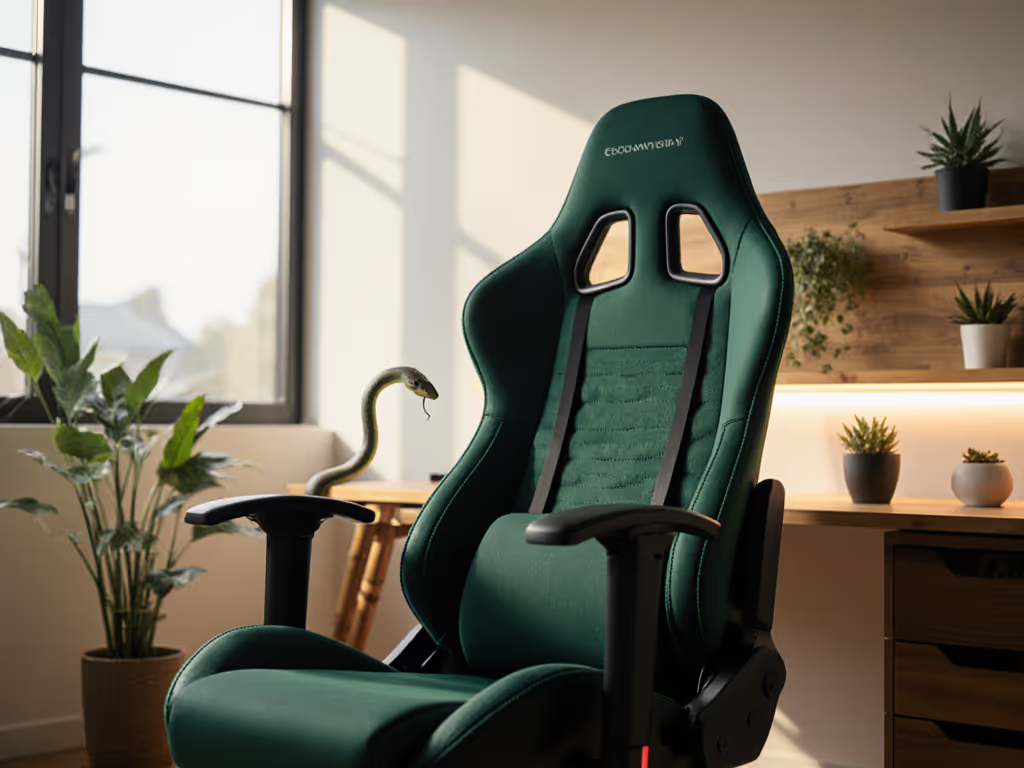
A video gaming chair can be leather-free without being verified cruelty-free, and that distinction matters more than marketing suggests. If you are looking for a cruelty free gaming chair, the available product disclosures do not establish that fabric, synthetic leather, foam, glue, coatings, or other inputs contain no animal-derived materials, or that no animal testing occurred. Nor is there independent comparative testing here showing a non-leather chair beats leather for comfort. The practical answer is to buy for disclosed upholstery, fit, adjustment, and service terms, then ask the unanswered ethical questions before checkout.
Start With the Claim You Can Actually Verify
"Gaming chair not leather" is an upholstery description. "Cruelty-free" is a supply-chain claim. They should never be treated as synonyms.
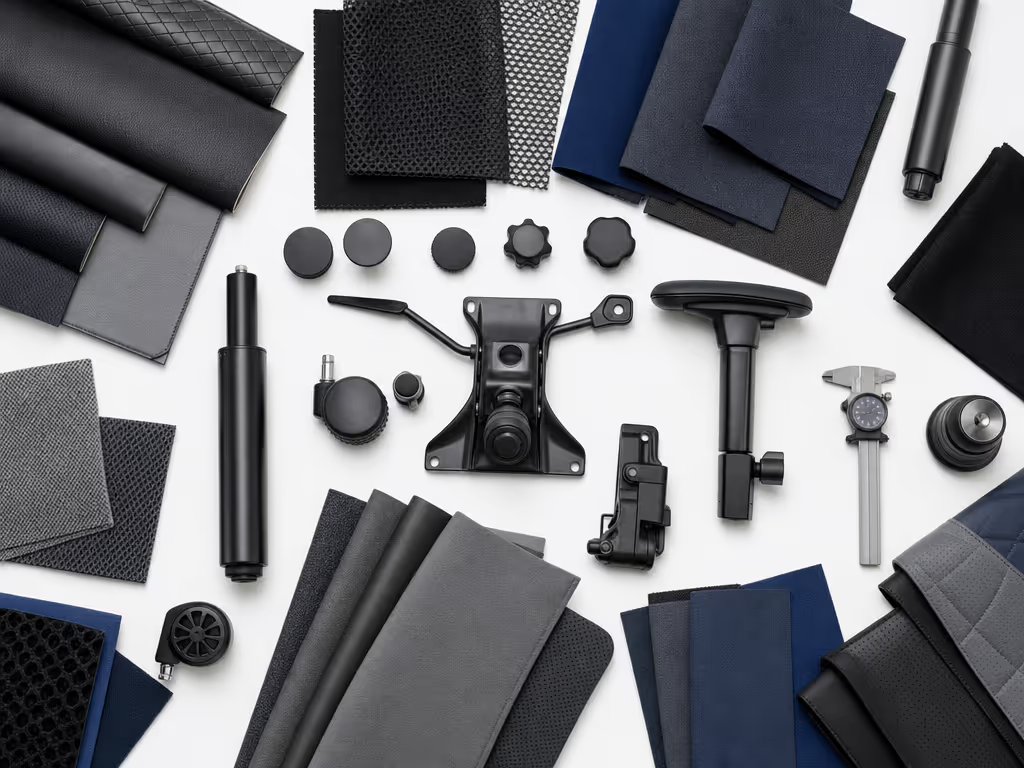
For an upholstered chair, the visible cover is only one consideration. Foam or cushion material, upholstery, finishes, and glues can each require separate disclosure. Furniture guidance also notes that formaldehyde can be used in furniture glues and compressed wood. That does not tell us what is in a particular chair; it tells us why a fabric label alone is not a full ethical-materials answer.
Before calling a chair suitable for an ethical gaming setup, ask the manufacturer or seller these direct questions:
- Is the specific configuration upholstered in leather-free material?
- Does the company state that the complete chair contains no animal-derived materials?
- Is there an independent vegan or cruelty-free certification relevant to the chair or its materials?
- Are upholstery treatments disclosed, and is the fabric untreated?
- What do the warranty terms cover, and what cosmetic or misuse exclusions apply?
If the answer stops at "synthetic leather" or "fabric," classify it accurately: leather-free upholstery is disclosed; a broader cruelty-free claim is not. That is less exciting copy, but it is the honest buying standard.
PU Leather vs. Real Leather: The Comfort Verdict Is Not Proven
The phrase PU leather vs real leather often turns into a simplistic material argument: one side says synthetic is automatically better for ethics, the other says leather is automatically better for longevity or feel. The evidence available for these non-leather gaming chairs does not support either broad comfort verdict.
What can be said is narrower:
- A chair with synthetic leather or fabric upholstery may meet a buyer's requirement to avoid leather upholstery.
- That upholstery choice alone does not verify a vegan or cruelty-free chair.
- No independent controlled comparison was collected showing these non-leather gaming chairs are more comfortable or more durable than leather chairs.
- Manufacturer comfort language should remain a manufacturer claim, not a substitute for a long-session test.
Value is durability measured in comfortable hours, not launch hype.
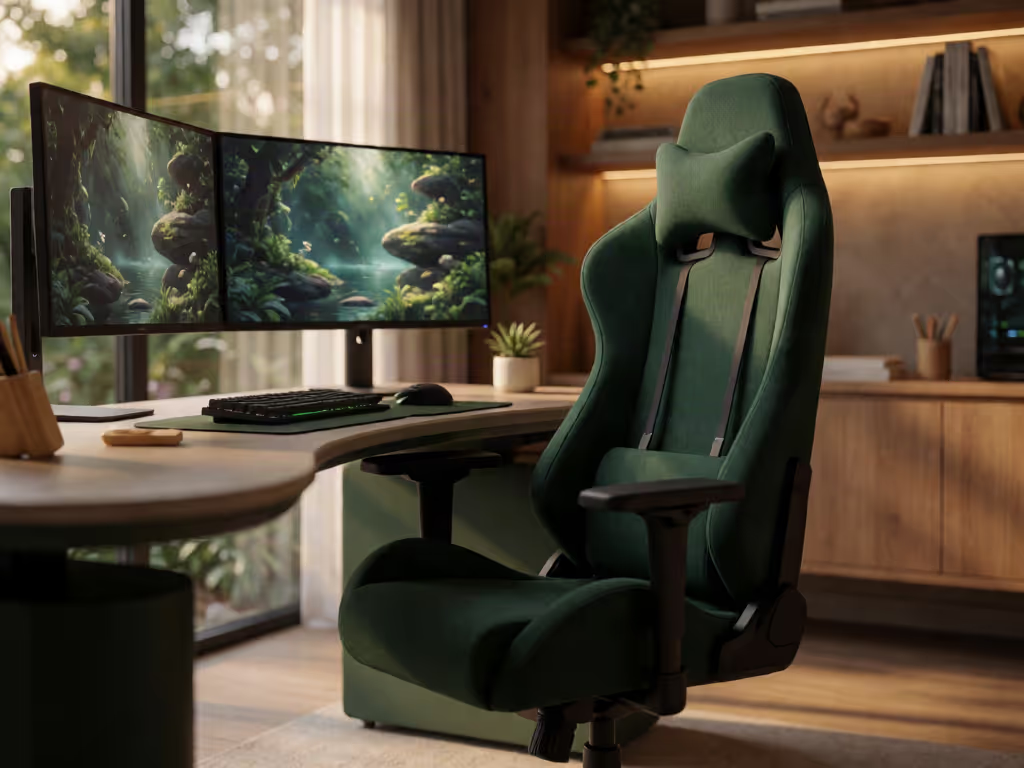
Comfort is not a surface-material trophy; understanding gaming chair ergonomics is just as important as choosing the upholstery. A chair must fit the person using it and permit useful adjustment. Independent editorial testing of office chairs has observed that adjustments can help users tailor comfort to height and preferences, but that is not proof that any one gaming model will fit every body or playstyle.
So do not purchase a chair merely because it promises "all-day" performance or because its cover is non-leather. Purchase only after checking whether its dimensions and adjustments solve your failure point: a neck support that lands wrongly, arms that cannot meet your desk height, or a recline that does not suit controller sessions.
A Better Comparison: Upholstery Disclosure, Fit, and Repair Risk
A useful comparative analysis separates three decisions that are often bundled together.
1. Is the upholstery disclosed clearly enough?
A fabric option can be easier to evaluate ethically than a vague "premium" finish, but only if the description identifies the actual upholstery and configuration.
For example, Secretlab describes its SoftWeave Plus Fabric as a soft, breathable performance knit and describes the TITAN Evo 2022's cold-cure foam as medium-firm. It also says the chair uses a sculpted ergonomic backrest and pebble-shaped seat base designed to adapt as the user moves. Those are manufacturer descriptions, not independent proof of cooling, pressure reduction, or universal comfort.
Vertagear's PL4800 page describes HygennX as a velvet fabric infused with coffee-ground nanotechnology. Yet that same page also lists PUC, a PVC-and-PU faux-leather combination, in its construction-and-materials information without specifying which panels or configurations use which material. That ambiguity is a stop sign for anyone seeking a fully leather-free configuration: get a configuration-specific answer in writing before buying.
2. Does the chair accommodate your posture and setup?
The best video gaming chair is not a universal number-one model. It is the one whose documented size and adjustments match your desk, body, and use pattern.
Use this inspection sequence:
- Measure your working posture. Record your desk height, elbow height while using mouse and keyboard, and the distance from your back to the inside of your knee while seated. These measurements give you a concrete basis for judging published chair dimensions.
- Read the adjustment list, not just the marketing headline. Confirm the available seat-height range, armrest adjustments, recline/tilt controls, and whether the chair supports the positions you actually use.
- Check the manufacturer's fit guidance. Treat it as a starting point, not a guarantee. If you are petite, tall, broad-shouldered, or heavier, ask support for the dimensions that matter to your fit rather than accepting a generic "adult" label.
- Plan the return before assembly. Check current return rules, shipping responsibility, packaging requirements, and whether assembled products are eligible. Fit uncertainty is expensive when a large chair must be shipped back.
3. Can you calculate the risk beyond the purchase price?
A warranty is not a durability test. It is a conditional commercial promise that can contain exclusions for aesthetic defects and misuse. Still, it is worth reading because gaming chair warranty coverage tells you what support route exists if a component fails.
Secretlab states that its chairs have up to a five-year extended warranty, subject to the legal terms applicable at purchase. That is a meaningful data point to investigate, not evidence that the fabric, foam, or mechanism will last five years for every user.
Use a cost-per-hour estimate to resist both bargain-chair optimism and premium-chair mystique:
Cost per comfortable hour = purchase price ÷ expected comfortable use hours
For illustration only, estimate your own expected use over time before treating a price as value. A $250 chair that becomes uncomfortable or mechanically troublesome much sooner can cost more per usable hour. The uncertain number is not the price; it is the chair's comfortable service life. That is why warranty coverage, spare-part availability, and transparent component information deserve more attention than LED trim or a dramatic silhouette.
Common Failure Modes to Screen For Before You Commit
A chair is a small machine with upholstery attached.
Ask support these questions before the return window becomes your only leverage:
- Which parts can be replaced if they wear or loosen?
- Are warranty claims handled with replacement parts, repair instructions, or full return shipment?
- Is the warranty period the base term or an extension requiring registration or other steps?
- Which exclusions apply to visible upholstery changes, and do the material-specific care requirements affect coverage?
- Can the seller confirm the precise upholstery material for the colorway and size being ordered?
This method does not prove that a chair will never creak, flatten, or disappoint. It does reduce the chance that you buy an opaque product whose only reassuring specification is its appearance.
Summary and Final Verdict
A leather-free chair can be a sensible choice for gamers who do not want leather upholstery. But on current disclosures, do not label a fabric, PU, PVC, faux-leather, or synthetic-leather model a cruelty free gaming chair unless the maker substantiates that broader claim for the complete product.
Likewise, do not accept "beats leather for comfort" as a verified conclusion. There is no independent comparison here that supports it. The defensible verdict is more useful: choose the chair with the clearest configuration-specific material disclosure, adjustments that match your measurements and play posture, and warranty terms you have actually read. For related buying considerations, see sustainable gaming chair setup. A chair that remains comfortable, quiet, and repairable through years of sessions is the better investment, whatever its cover is called.
Related Articles